Why a Good Solana Explorer Changes How You Track NFTs and Tokens
Whoa!
Okay, so check this out—blockchain explorers feel boring until they save you real money.
At first glance they look like raw tables and hex strings.
My instinct said they were just for devs and weird power users.
But then I started using them in earnest and things shifted slowly.
Here’s the thing. Solana moves fast, literally and figuratively. Really?
Blocks come in at sub-second intervals on mainnet-beta and that speed masks a lot of nuance.
Transactions can flip from pending to confirmed quicker than you can refresh.
So if you’re tracking an NFT mint or watching a sudden token transfer, timing matters.
Hmm… timing and traceability make the difference between a smart trade and a missed airdrop.
I remember chasing a limited mint last year and refreshing wallets like a madman.
It felt chaotic, honestly, and somethin’ about the UX bugged me.
That experience pushed me to learn explorers deeply instead of guessing.
Initially I thought explorers only showed transactions, but then I found deeper layers.
Actually, wait—let me rephrase that: they surface program logs, instruction data, and token metadata too.
Most people want three things from a Solana explorer: clarity, speed, and trust.
Clarity means readable token ownership and readable transaction traces.
Speed means results that match on-chain finality quickly and reliably.
Trust comes from consistent indexing and clear provenance of NFT metadata.
On one hand you rely on real-time updates; though actually indexing lags sometimes depending on the provider.
So how do you use an explorer as an NFT tracker? Start with the mint address.
Search it and check the token mint account for supply and metadata pointers.
Then inspect the token’s metadata account to confirm the JSON URI and image host.
If the image resolves to IPFS or Arweave, you get higher confidence in permanence.
On the other hand, if metadata points to a flaky HTTP host, buyer beware.
Watch program instructions on mint transactions to see creator addresses and royalties.
Pay attention to update authority changes; those are red flags if they happen after mint.
Look at the “token holders” list and check concentrated ownership — sometimes whales own huge percentages.
That concentration influences floor price volatility and manipulation risk.
Seriously?
Explorers also help with forensics when something goes wrong.
If an airdrop doesn’t arrive, trace the snapshot block and follow the instruction logs.
Often you can see which snapshot tool the project used and whether they used compressed NFTs.
Compressed NFTs complicate tracing because they’re wrapped in different program calls and accounts.
On the plus side, modern explorers have special views for compressed assets that simplify this process.
One practical tip: use filters aggressively.
Filter by program ID, instruction type, or token mint to remove noise.
It saves time when tracking targeted contract activity in a bustling cluster.
Also keep an eye on cluster selection — devnet, testnet, and mainnet-beta are distinct realities.
Don’t mistake a successful testnet mint for mainnet success.
Security-wise, an explorer helps you spot phishing and rug pulls.
Check whether a token’s metadata creator address matches the project’s official announcement.
Cross-check mint transaction timestamps against social channel claims; mismatches often reveal scams.
I’m biased toward transparency, but this part bugs me when projects hide metadata or obfuscate authorities.
It’s a small thing that matters a lot.
My favorite quick checklist
Use the explorer to confirm mint authority, verify metadata URIs, inspect token holders, and monitor program logs.
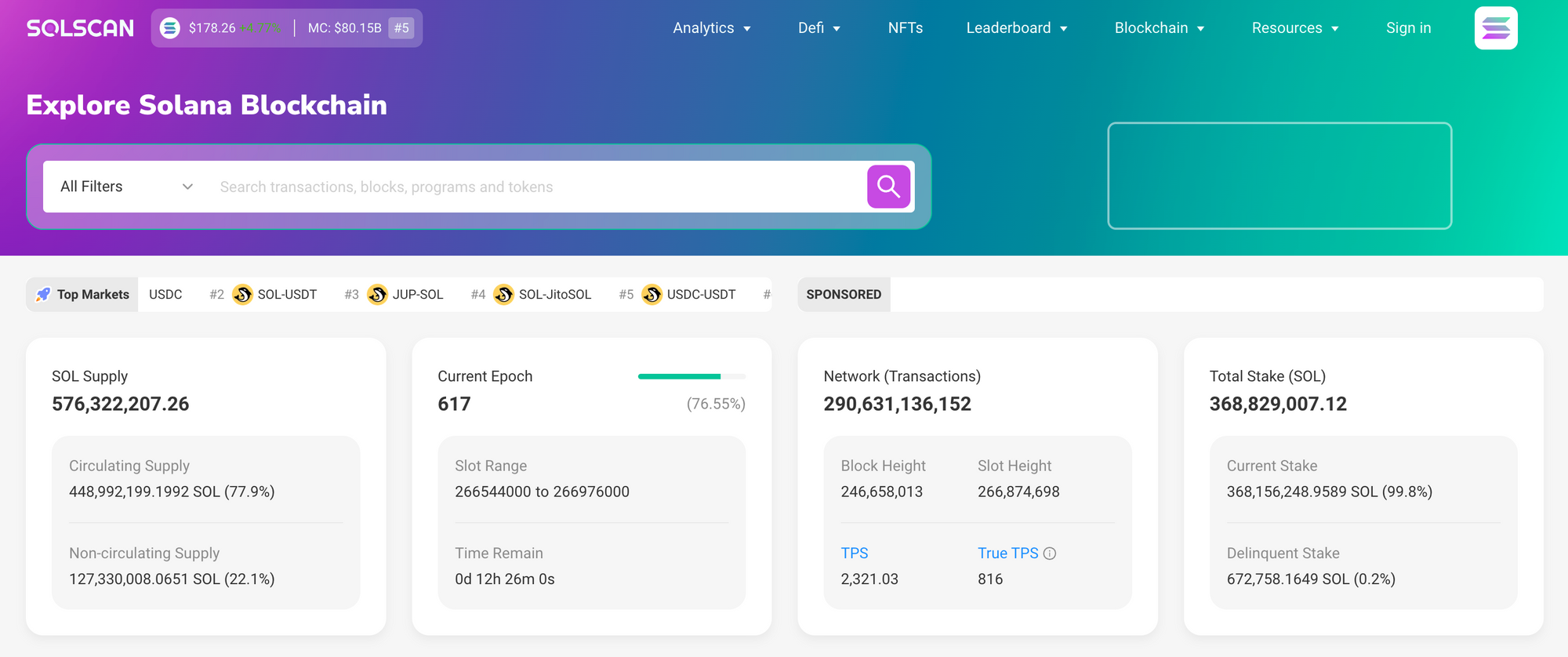
If you’re looking for a reliable, user-friendly option, try the solscan explorer official site — it’s one of the tools I reach for first.
It gives intuitive token pages, clear instruction breakdowns, and compact NFT views that help you move faster.
Sometimes I open a second explorer in another tab for cross-verification (oh, and by the way… redundancy helps).
Double-checking can catch display bugs or temporary indexing delays.
Advanced users should save transaction signatures and use RPC calls to replay or deep-inspect events.
Program logs often include the precise error messages you need to debug an on-chain failure.
That level of granularity is invaluable for developers and power traders alike.
On one hand it’s technical; though really it’s just disciplined curiosity applied to raw on-chain evidence.
I’m not 100% sure every reader will need this, but it’s good to know it’s there.
There are trade-offs between UX and raw data access.
Some explorers simplify everything and hide detail to avoid overwhelm.
Others give you every byte, which can be noisy and heavy.
Find the balance that fits your workflow and comfort level with on-chain plumbing.
Wow!
Final thought — explorers are maps, not magic.
They tell you where things moved and when, but they don’t replace judgment.
Use them to verify claims, protect funds, and learn how NFT and token ecosystems behave on Solana.
My instinct still nudges me toward skepticism by default, which has saved me more than once.
And yeah, somethin’ about seeing a raw transaction log still gives me a small thrill.
FAQ
How do I find the true creator of an NFT?
Check the mint transaction and the metadata’s “creators” field, then verify the update authority hasn’t changed; if the metadata is on IPFS or Arweave you’re safer against link rot.
Why does an NFT I bought not appear in my wallet immediately?
Sometimes transfers use intermediate accounts or compressed mechanisms; check the transaction signature, look at token account changes, and confirm the wallet’s indexer has synced to the correct slot.
Which explorer should I trust for fast diagnostics?
Use a combination: one explorer focused on UX and one that exposes raw program logs; cross-checking between them reduces false positives from indexing delays.